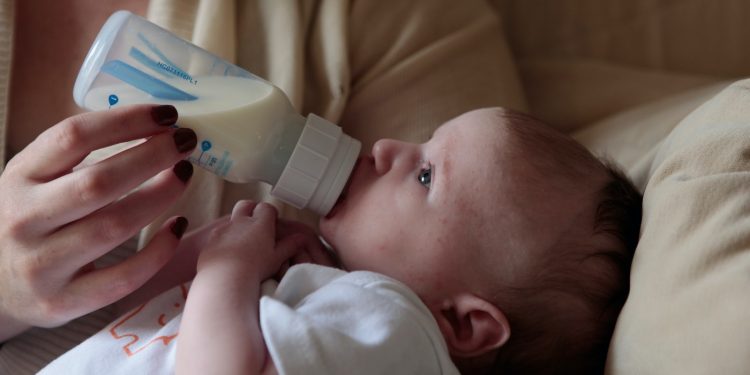
The team studied the blood oxygenation of the infant brain, measured by near infra red light and also by a net of electrical sensors in a method called EEG that picks up brain waves. They show that a gaze activates parts of the cortex, where the equivalent job of monitoring gazes is done by adults (the temporal and prefrontal cortex). Babies can pick up on gaze, even when looking at a face sideways on. "In four -month-old babies we demonstrate very early specialisation, and indeed, an adult-like pattern of activation of the brain regions that process face-to-face social interaction," said Dr Grossman.
Studies in other laboratoriess already demonstrate that toddlers with autism have difficulty making eye contact. Dr Grossman says that future work will focus on how important this aspect of development is for social skills.
"The main goal of my work is to understand the brain mechanisms that underlie typical (healthy) social development. But I still hope that once we better understand healthy development that we can use this knowledge to look into what might go awry in neurodevelopmental disorders."
"We are not claiming it could diagnose autism - merely that it may prove a useful early warning signal," added Prof Johnson, whos work is backed by the MRC and Wellcome Trust.
Pioneering work by Prof Johnson at Birkbeck, which has one of the world's top baby labs, has shown that infants are interested in faces and that newborn babies not only prefer to look at faces that have open eyes but also exhibit a strong tendency to attend to faces that engage them in mutual gaze as compared to averted gaze.
It is argued that an early sensitivity to eye gaze serves as a major foundation for later development of social skills and that insensitivity to where another is looking could be an early sign of disorders such as autism.
"What we did not know before is which brain systems young infants use to process face-to-face communication and whether these brain systems and processes are similar to those employed by adults (i.e. whether they specialise early in development)," said Dr Grossman.
By comparison, the so-called fusiform face area, which enables us to recognise another person's face, takes up to a decade to develop this level of specialisation. This comes together with with a study that came out a few weeks ago, where Dr Roberto Caldara at the University of Glasgow found that cultural differences cause us to look at faces differently.
Another recent brain scan study found that when a new mother gazes at her baby, it isn't just her mood that lights up - it's also a brain region called the orbitofrontal cortex associated with emotion processing, confirming what all mothers know: just looking at baby makes them happy.
August 2008
Back To Our Main News Section
Look At Other News Snippets Here |